


How We Teach Writing at Belleville
To enable all children to write both creatively and academically.
Our Writing Progression Framework
Writing is a hugely complicated yet vitally important skill for all children to be successful in both life in school and the community. Within our school, we use a systematic progressive genre-based approach to writing. Our writing progression framework, which enhances the National Curriculum for Writing, intends to achieve the following:
To enable all children to develop
a repertoire of knowledge and skills
in order to write both creatively and academically
for a range of audiences and purposes
through a variety of genres and text types.
Effective writers employ and apply a wide repertoire of knowledge and skills to make them successful. A writer constantly has to consider the skills of handwriting and spelling (transcription), idea generation and planning (composition), and grammar and punctuation (mechanics).
Writing can do a great many things: inspire; entertain; inform; explain; instruct; persuade; and many more. It is our aim that all children are able to write both creatively for enjoyment and academically for meeting a specific purpose. We have a rich diet of engaging and exciting texts and experiences that stimulate high-quality writing.
In order to ensure the progression of knowledge and skills throughout our writing curriculum, we teach a diet of genres and text types. These genres are systematically differentiated for year groups to make the purpose of our writing very clear:
- Narrative – to tell a story with a problem and a resolution
- Recount – to recount an event that has happened
- Information – to inform the reader about a thing, idea or concept
- Explanation – to explain why or how something happens
- Procedure – to instruct what to do
- Persuasion – to convince someone about something
- Response – to respond and review something
From the beginning of our writing curriculum, we teach awareness of the audience. This builds the foundations for exploring the Academic Register in Key Stage 2, which helps us to write appropriately for a range of audiences with different degrees of formality.
.jpg)
Transcription
Transcription is the skill of being able to take an idea and put it into written form. This involves being able to represent sounds as letters and words in a controlled way through handwriting. It also involves using the correct letters (graphemes) to represent the sounds in a word (phonics) through phonics and spelling knowledge.
As with reading, throughout our systematic synthetic phonics programme we explicitly teach ‘Jolly Phonics’ actions to engage our learners. Fred is crucial to the teaching of Phonics. He is able to segment using pure sounds but is not able to blend the sounds, therefore encouraging 100% participation from the children and reinforcing the skill of blending. From the earliest stages of writing, children are taught how to count sounds on their fingers and how to use sound buttons to support their early writing skills.
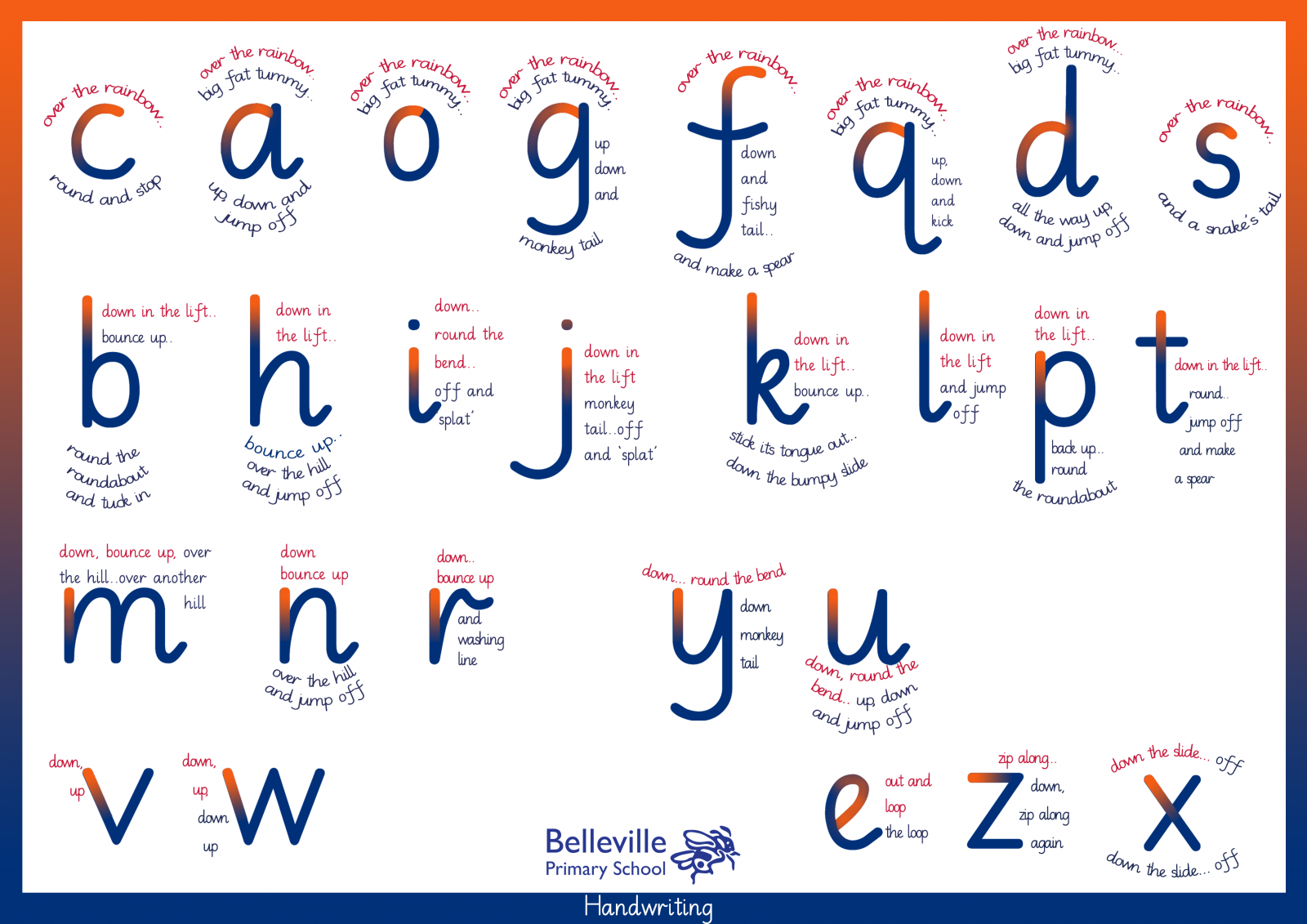
Composition
We develop the complexity of our compositions through the use of Semantic Building and the Detail Grid. These are both memorable skills and strategies that are introduced progressively in early writing, right through to Year 6. Semantic Building helps us to develop detail within-sentences and the Detail Grid helps us to develop detail in paragraphs.
Writing is taught on a daily basis from Year 1 to Year 6, and lessons are delivered using a variety of methods, including shared writing (modelled writing with contributions from the children), guided writing (writing in small groups with support), and skills lessons (focus on spelling, grammar and punctuation).
.png)
.png)
Planning
Planning of writing is taught in a systematic manner, building on the skills of semantic building and the adding of details through couplets (Year 1), as well as the Detail Grid (Year 2 – 6). A vital part of planning is note-taking and this is introduced in Year 1. Children are given memorable strategies for planning introductions and conclusions (GSV/VSG), which become increasingly complex as they progress through the school.
Drafting
Each week, children are given an extended period for independent writing called Writing Enrichment. When they do write, children are expected to write with double spaced to allow for improving writing. Improvements in writing are taught through editing and revising using the memorable strategy of ARMS (revising) and CUPS (editing).
.jpg)
Grammar and Punctuation
The teaching of grammar and punctuation is fully embedded in the writing process. Grammar skills are taught as appropriate to the genre that the children are writing. The importance of Standard English, written-like language, and expert language is emphasised and promoted in all year groups.